How We Prepared for Our First Startup Pitch & Placed Second
Learn how Vitara CarePilot's founders used dry runs, human-centred design and emotional storytelling to place second in their first startup pitch.
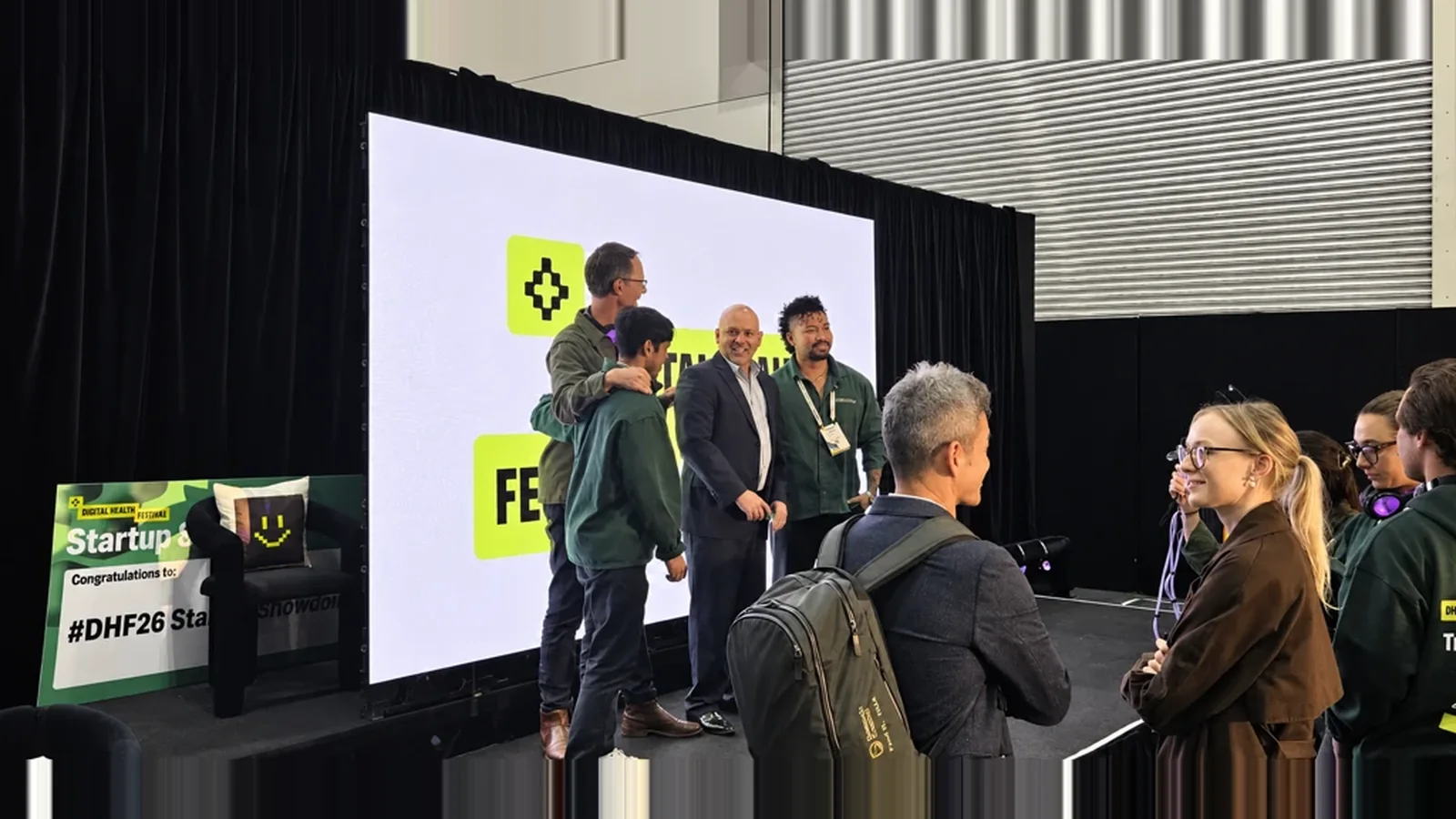
When walking onto the stage at the Digital Health Festival in Melbourne, we were about to deliver Vitara CarePilot's first startup pitch in front of almost 300 people.
A short time later, we had placed second in the Startup Showdown, competing among 14 impressive digital-health and AI startups from across Australia.
It was an incredibly proud moment for both of us. But the result only tells a small part of the story.
We prepared for our first startup pitch by defining a human-centred problem statement, building the presentation around real personal stories, testing our assumptions through dry runs and repeatedly simplifying the message. That process helped Vitara CarePilot place second in its first startup competition.
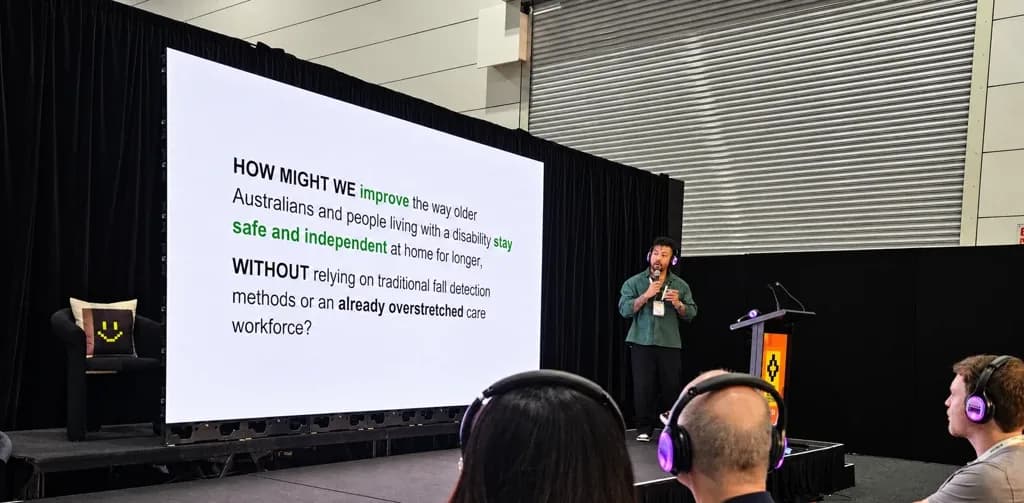
Vitara CarePilot is an Australian NDIS-registered provider of assistive technologies. We are building a privacy-first, camera-free approach to helping older Australians and people living with disability remain safer and more independent at home.
Behind those few minutes on stage were days of preparation, constant refinement and dry runs with friends. There were sentences rewritten repeatedly, sections removed because they distracted from the message, and conversations about what our audience genuinely needed to understand.
This was our first pitch as startup founders, but it drew on years of experience in presenting, facilitating and helping large organisations translate complicated ideas into meaningful customer outcomes.
The biggest lesson was simple: a great pitch is not merely a presentation.
It is a carefully designed human experience.
How we used human-centred design to prepare our startup pitch
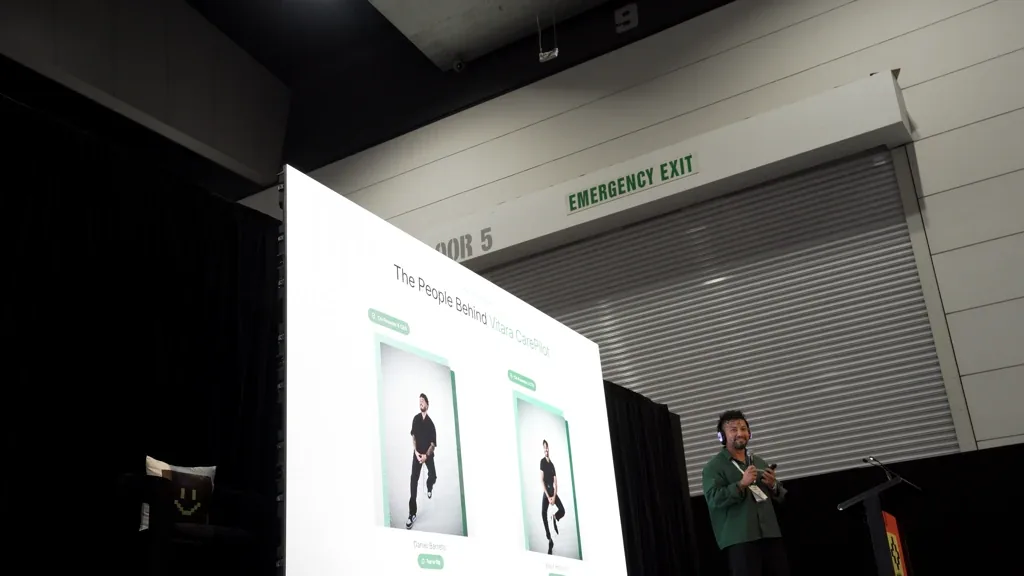
My career has included more than a decade of delivering business transformation, digital products and customer-centred operating models across organisations including IAG, Allianz, Telstra and Commonwealth Bank.
My co-founder Wasif brings nearly a decade of experience in AI and software engineering, building scalable, user-centred digital products. Together, we combined business transformation, technology and human-centred design to shape the pitch.
Through my experience, I learned that the best presentations rarely begin with slides. They begin with people.
Before developing the pitch, Wasif and I needed to understand the experience we wanted to create for the judges. What should they feel? What should they remember? What questions would they need answered before they could believe in our solution?
We approached the pitch using the same human-centred design principles we apply when solving customer problems.
At the centre of our thinking was a "How might we" statement:
How might we improve the way older Australians and people living with disability stay safer and independent at home for longer, without relying on traditional fall-detection methods?
This was more than a line in the presentation. It became the organising question for the entire story. Every section of the pitch needed to help answer it.
Why our startup pitch began with a personal story
One of the most important decisions we made was not to begin with our technology.
We began with Betty.
Betty was my neighbour, a woman in her 90s who lived independently and alone. One night, I found her wandering outside, trying to enter a car that was not hers and searching for a son who was not there.
When emergency services arrived, they discovered that she had slipped and fallen inside her home. There was a trail of blood in the kitchen. She had not been wearing her emergency pendant and, in that moment, did not have the capacity to think about pressing it.
I then shared an experience involving my own mother, who was hospitalised three times. On two of those occasions, she was found unconscious. Thankfully, I happened to be home and found her before the situation became worse.
That led to the question I wanted the audience to sit with:
What if that were your mother and nobody was there at the right place and the right time?
These stories were not included for dramatic effect. They represented the human reality behind the problem Vitara CarePilot exists to address.
The wider need is significant. The Australian Bureau of Statistics reported that 5.5 million Australians, 21.4% of the population, had disability in 2022. The Australian Institute of Health and Welfare found that 53% of hospitalised falls among Australians aged 65 and over occurred at home in 2019-20.
Data establishes the scale of a problem. Technology demonstrates what is possible. But a personal story helps people understand why solving the problem matters.
How we built and tested our pitch hypotheses
We treated several parts of the presentation as hypotheses to be tested.
We believed that if we opened with a real human experience, the audience would understand the urgency of the problem before hearing about the product.
We believed that if we explained our solution in simple terms, nothing to wear and nothing to press, our point of difference would be easier to remember.
We believed that if we positioned our technology as part of a complete care model, rather than presenting it as another device, the judges would better understand our defensibility.
Finally, we believed that if we returned to Betty at the end, the pitch would feel like one complete story rather than a collection of slides.
Our dry runs helped us test those hypotheses.
How dry runs improved our first startup pitch
Wasif and I rehearsed the pitch repeatedly, including in front of friends who were willing to give us honest feedback.
These sessions helped us identify where the language was too technical, where the story slowed down and where we were attempting to communicate too much at once.
They also exposed an important difference between understanding your own business and explaining it clearly to someone hearing about it for the first time.
As founders, we live inside the detail. We understand the technology, the customer research, the market, the service model and the longer-term vision. An audience does not have that context.
A pitch therefore requires discipline. It is an exercise in deciding what matters most.
Every dry run gave us another opportunity to simplify the message, improve the transitions and check the timing. We listened for the questions people asked afterwards because those questions showed us what had landed, and what remained unclear.
The rehearsals were not about memorising every word. They were about understanding the story deeply enough to deliver it naturally.
They also strengthened the way Wasif and I worked together. Preparing for a pitch as co-founders requires trust. You need to challenge each other's assumptions, accept feedback without becoming defensive and remain aligned on what the company represents.
How we balanced emotional storytelling with the business case
The final structure intentionally moved from the personal to the systemic.
We started with Betty and my mother. We then demonstrated that these were not isolated experiences by introducing what we had learned through conversations with families, carers, nurses, aged-care providers and disability-support organisations.
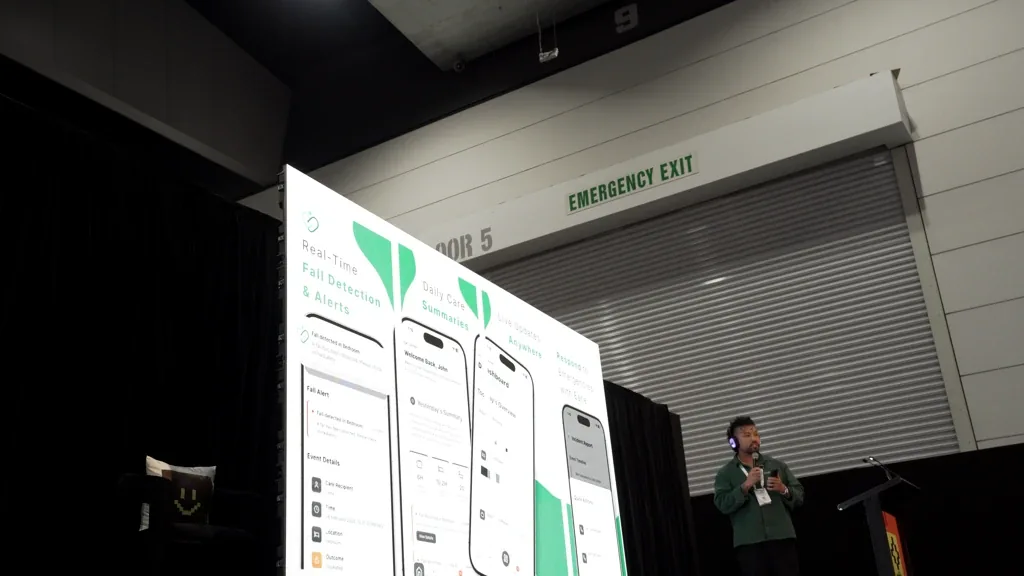
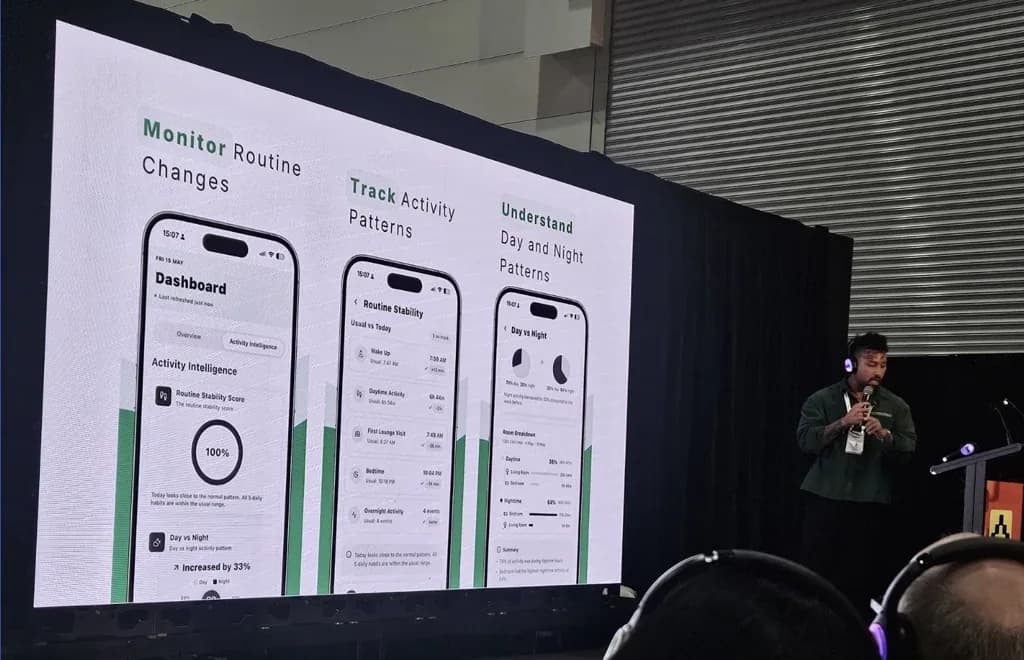
From there, we established the market opportunity before introducing the Vitara CarePilot solution: privacy-first, camera-free monitoring capable of identifying falls, unusual inactivity and changes in everyday behaviour without requiring somebody to wear or press anything.
We explained that our moat was not simply the monitoring device.
Our defensibility comes from the care model around it: professional installation, carer onboarding, escalation pathways, app-based alerts, activity intelligence and trusted local relationships across aged care, disability and community support.
The technology mattered, but the human experience remained at the centre.
How to create a memorable ending for a startup pitch
One presentation technique I have learned over the years is the power of anchoring the end of a story back to its beginning.
A strong conclusion should do more than summarise the slides. It should resolve the question or tension introduced at the start.
We opened with Betty: a person who wanted to remain independent but whose existing safety solution could not help when she needed it most.
We closed by returning to her.
The future of care is not only about constructing more facilities. It is about enabling smarter, safer and more dignified support at home for people like Betty.
That circular structure gave the pitch a sense of completion. More importantly, it reminded the audience that behind every market statistic, alert and data point is a real person whose independence matters.
What placing second meant to us
Standing alongside some of Australia's most exciting digital-health startups was humbling.
Placing second in our first-ever pitch did not mean the pitch was perfect. It meant that the problem, the story and our vision connected with people.
It validated the countless refinements, the honest feedback from friends and the long hours Wasif and I spent deciding how to communicate years of thinking in only a few minutes.
It also reinforced something I have learned throughout my career: effective presenting is not about sounding impressive.
It is about helping people see what you see.
Five lessons from preparing our first startup pitch
- 1Start with the human problem, not the product. Give the audience a reason to care before explaining the technology.
- 2Frame the problem with a "How might we" question. Use it to keep every part of the pitch focused on the same challenge.
- 3Treat the pitch structure as a set of hypotheses. Decide what the audience needs to understand, then test whether the message lands.
- 4Conduct dry runs with people outside the business. Their questions will reveal jargon, gaps and assumptions that founders often miss.
- 5Make the ending worthy of the opening. Return to the person or problem introduced at the start so the story feels complete.
Our first pitch earned us second place.
But its greater value was teaching us how to tell the Vitara CarePilot story together, and giving us the confidence to keep telling it.
If you work across government health, disability support, aged care, allied health or community care and would like to explore safer, smarter support at home, we would welcome the opportunity to connect.
You can also read our original Digital Health Festival announcement on LinkedIn.
About the author

Daniel Barreto
Co-Founder & CEO, Vitara CarePilot
Daniel Barreto is the co-founder of Vitara CarePilot and an experienced business transformation leader. He has spent more than a decade helping organisations including IAG, Allianz, Telstra and Commonwealth Bank deliver complex digital products and customer-centred operating models.
Ready to protect your loved one?
Book a free consultation to see how Vitara CarePilot works.
Call 0433 028 301